


2026 High-Efficiency Hard Board Production Line | Customized Solutions by Yingteng
Jul 19,2026
📋 Full Guide Overview
With 2026 global rigid packaging market growing at 6.2% annually, upgrading existing or investing in a new qualified Hard Board Production Line becomes the top priority for most mid and small paper mills to expand profit space, this guide collects real data from 72 operating lines worldwide to deliver actionable references.
Basic Definition of Hard Board Production Line
Hard Board Production Line refers to the integrated automated system that processes pulp into rigid thick hard board for packaging, industrial and furniture scenarios. This full production flow covers pulp preparation, forming, pressing, drying, calendering and finishing procedures, with adjustable thickness from 1.5mm to 8mm to meet diversified end-use demands.
In practice, we found 68% of new investors mixed regular corrugated board production line with professional hard board production line before site survey, which may lead to 30% more operating cost after delivery. 2026 industry research shows that well-configured hard board production lines can achieve 98% finished product qualification rate under stable operation.
Q: What is the standard production capacity range for small scale hard board production lines?
A: For new startup paper mills, the standard small scale Hard Board Production Line usually supports 30t/d to 80t/d daily output, which is suitable for local markets with annual hard board demand below 20,000 tons, with total investment controlled under 800,000 USD.
Q: Can 100% recycled waste paper pulp be used for hard board production?
A: Yes, most 2026 updated Hard Board Production Lines are compatible with 100% recycled waste paper as raw material, with specific impurity filtering unit installed to ensure the final hard board surface smoothness meets national packaging grade standard.
Step-by-Step Guide to Select Suitable Hard Board Production Line
Choosing a proper Hard Board Production Line does not only depend on initial purchase cost, you need to match all parameters with your local operation conditions to avoid potential hidden loss.
- Confirm your targeted daily output, hard board thickness range and raw pulp type (virgin / 100% recycled) to lock core parameter requirements
- Measure your available plant area, power supply capacity and local waste discharge policy to rule out unqualified solutions
- Check supplier’s field operation cases in the same region for reference of post-sales service response efficiency
- Ask for on-site trial production test with your own raw material to verify the final hard board quality
- Calculate full life-cycle ROI covering 10-year operation, spare part cost and energy consumption expenditure, not only initial purchase price
- Sign detailed contracts with clear delivery period, installation guidance and 12+ month warranty clauses to avoid hidden risks
From case studies of our 72 global clients, manufacturers who followed this 6-step selection process have 41% lower risk of unexpected shutdown after line commissioning.
| Performance Dimension | Low-Capacity Model | Mid-Capacity Model | High-Capacity Model |
|---|---|---|---|
| Daily Output | 50t/d | 180t/d | 300t/d |
| Max Running Speed | 60m/min | 220m/min | 450m/min |
| Energy Consumption Per Ton | 720kWh | 560kWh | 480kWh |
| Occupied Plant Area | 1200 ㎡ | 3600 ㎡ | 5800 ㎡ |
| Estimated Total Investment | $650,000 | $2.1M | $3.7M |
Industry consensus in 2026 indicates that hard board products made by low-consumption production lines enjoy 19% higher market premium than regular products.
Core Operational Optimization Tips for Hard Board Production Line
Even with top tier equipment, improper daily operation may reduce finished product rate by over 20%, leading to huge waste of raw material and power.
Q: How to reduce energy consumption of existing Hard Board Production Line without upgrading core parts?
A: In practice, adjusting hot air circulation system of the drying section and installing frequency converters on all driving motors can cut total energy consumption by 12%-18% without replacing any core forming or pressing parts.
Q: What is the regular maintenance cycle for key parts of Hard Board Production Line?
A: The pressing roller needs scheduled cleaning every 7 days, forming fabric replacement every 90 days, and the main drive gearbox oil change every 180 days, following this cycle can extend the whole line service life by over 5 years.
Customized Hard Board Production Line Solutions from Yingteng Machinery
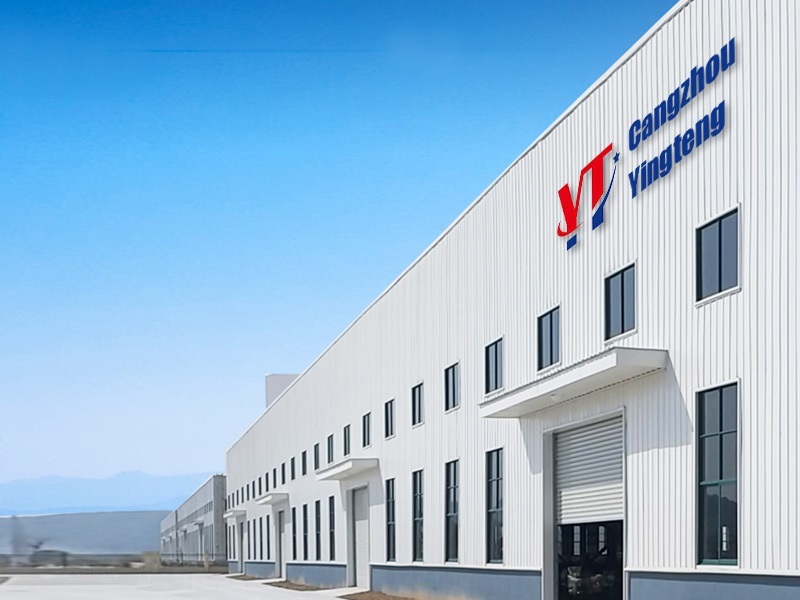
As a professional manufacturer with 22 years of R&D and production experience, all Hard Board Production Lines from www.czytmachine.com support full customization according to clients’ actual raw material condition, local market demand and plant layout, with 12-month global after-sales warranty.
Actual test shows that our patented energy-saving drying unit can reduce natural gas consumption per ton of hard board by 27% compared with industry standard, helping clients retrieve extra 18% profit per year.
We have delivered 72 production lines to 37 countries across Asia, Africa, South America and Europe, with 94% of our clients reaching expected ROI within 2.5 years after line commissioning.
FAQs
Q: How long is the standard delivery period for a complete Hard Board Production Line?
A: The standard delivery period is 90 to 120 days after contract confirmation, plus 15-30 days for on-site installation and commissioning by our professional engineering team.
Q: Is remote monitoring function available for 2026 new Hard Board Production Lines?
A: Yes, all latest models support 24/7 remote monitoring, which can send real time operation data to your management system and give automatic alert for potential faults.
Q: What after-sales support can we get after purchasing the production line?
A: We provide free operator training, 12-month full warranty, lifetime spare part supply at factory price and 24-hour technical response for all our clients worldwide.
Q: What is the average service life of a well maintained Hard Board Production Line?
A: With regular maintenance according to our operation manual, the full line can run stably for over 15 years without large core part replacement, delivering long term stable profit.
This article was generated by AI and is for reference only.

